Category: News
Categories
Taming the Stresses of Teenage Life
My daughter was sitting at the kitchen table recently, overwhelmed with school work and keeping up with her many tweets and texts when she had a revelation: “Mom,” she said, “I think it’s much harder being a teen today than it was when you were my age.” I replied, “Yes, I couldn’t agree more.” Between the rigorous demands of schoolwork and extracurricular activities required to get into any respectable college and the relentless intrusion of social media that prohibits teens from ever unplugging, it’s rough being a teenager today. Young people feel the pressure to be perfect that they see manifested in Twitter feeds that show everyone else having a great time. Media image of coifed models greet them at the persistent click of a button. Online bullying has become commonplace. All of this is taking a huge toll on our teens. I repeatedly speak with other parents who share their stories of children in desperate need of mental health services. High school was once a time to be carefree. But so many teens spend these years engrossed in worry. It’s no wonder that many indulge in dangerous alcohol abuse as a response to the pressure. My daughter, an editor of her high school newspaper, plans to write an article about how teenage life today compares to that of a generation ago. I hope, in doing so, she’s able to shed some light on what we’re doing wrong, so we as a society can figure out ways to do it right before our youth are further compromised.
I wanted to stand up and shout a resounding “amen!” after reading Tim Kreider’s article in The New York Times that exposed the way publications try to get experienced writers to offer their services for free. This was also exposed by Nate Thayer, who blogged about being approached by The Atlantic to write an article without being compensated even one penny. In an e-mail, Thayer told me his post received thousands of responses. It clearly struck a chord. This is a huge pet peeve of mine as well. Like Kreider, I’ve been approached numerous times by publications – including many upstarts – to write a blog for free. Like him, it astounds me that journalism is one field where editors feel no qualms about exploiting labor. There’s no question that so many publications are taking full advantage of the fact that there’s a plethora of inexperienced writers out there, many of whom are eager to see their name in print. And the promise of “exposure” is a great lure. As Kreider does, I also use the offers as an opportunity to enlighten editors on how I earn a respectable living as a freelance journalist and can’t possibly afford to work for free. The one exception is blogging for The Huffington Post, which I do feel reaches a large audience. Still, I oppose in principle their model, which does not compensate bloggers, so I don’t contribute often to the site. I also go a step further. When an editor asks me to research an in-depth article and offers a meager amount of money, I don’t hesitate to turn them down. I let them what a fair rate is for such an article, written by an experienced writer, I know that my responses often fall on deaf ears, as there are plenty of other writers out there happy for the work. I was intrigued by a recent discussion of freelancing on the Diane Rehm Show, which discussed a freelancers union. It will take some formal measure like this to get freelancers to unite and challenge the slave labor trend.
Categories
Oh Sweet, Lazy Summer, Where Have You Gone?
I’ve been enjoying the plethora of recent articles — as abundant as the vegetable harvest — that look back nostalgically on the simple summers of a generation ago. This is yet another area where technology has encroached, killing creativity and imagination in its wake. I recall entire days spent immersed in reading Gone With the Wind or Little Women, only stopping to eat. When my friends and I got together, we did not sit side-by-side staring at our iPhones, a favorite pastime of my daughter and her pals. One close friend and I spent numerous days giving each other manicures, playing board games, biking to the neighborhood pool, or just hanging out, where I would routinely utter the words “What do you want to do?” and she would respond “I don’t know. What do you want to know?” This back-and-forth could go on for an hour, though at no point did we complain of our boredom to a parent, not matter how desperate we became.
Flash forward to the present summer, where there is a never-ending supply of screen activity. Even when my daughter is alone, her community is with her: on Twitter, Instagram and through relentless texting. The texts can be overwhelming, but when they abate, it results in a feeling of rejection. Reading a book is often looked upon as a quaint pastime of a bygone era.
It doesn’t help that middle class children are overscheduled, their days dictated by parents who find intellectually challenging activities for them, be it exotic vacations overseas or day camps to explore the fun of physics. I feel like a rebel at times, but I’m finally at peace with the unscheduled summer. My children either take the initiative or — heaven forbid — they’re bored. It’s frustrating, but, faced with an endless day before them, they eventually become adept at figuring out how to fill it. I also insist that they pay for their expenses and get a summer job. My daughters ran a preschool camp in our backyard starting at age 11. They quickly appreciated earning money that they could spend without having to constantly ask my permission for something they want to buy. Now all teenagers, they’re gainfully employed. I am constantly amazed how few parents of teens encourage their children to look for a job. They fear it will unduly burden them, that it’s wrong to require a middle class child to be employed and that they should be focused on activities that bolster their college applications. But already I’ve seen the benefits of this experience. It’s taught my children to be resourceful in finding the job. They they’ve had to interact with adults — no easy task for today’s teen. They’re now more responsible and assertive and have gained exposure to all different types of individuals they wouldn’t have otherwise encountered. But perhaps the biggest benefit to me, as someone who works from home, is that once their shift is over, they’re so exhausted that they rarely utter the words, “I’m bored.”
Categories
Diving Deep Into a Local Story
In these days of sound bite journalism, being given the chance to write 5,000 words delving into a topic for a mainstream publication is a privilege. When I’m asked to contribute an article for The Ann, a magazine based in Ann Arbor, no word length is discussed. The idea is that I should submit a piece that’s long enough to do justice to the topic and to include all the important aspects so the piece is fair. So I dove in to the meaty subject of whether the city of Ann Arbor needs a new world class hotel and conference center. The result is this article. To those who don’t live here, the subject may seem trite. But for the many who have been pushing for a luxurious place to host meetings, those recruiting for the university and others seeking to boost tourism, it’s a big deal. In researching this article, I was able to learn more about local government and the role that the University of Michigan and private industry play when it comes to a decision like this. I found that there is no easy answer to why the city does not have a four star hotel. But at the very least, I hope the piece shed light on the issue and will become the launching point for further discussion.
Categories
Gathering At Graduation

The Halpert/Edelson clan gathers to celebrate my daughter’s college graduation, May, 2013.
Categories
Me and My Siblings
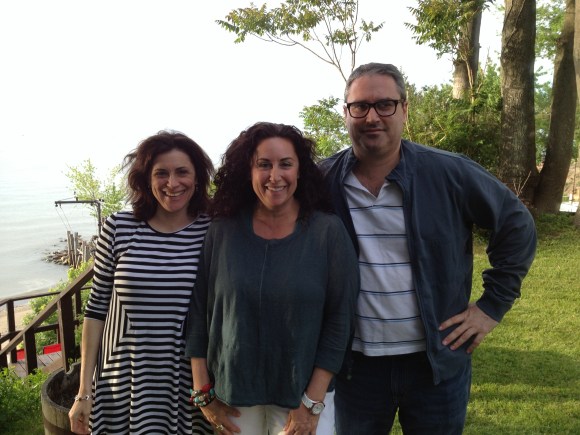 Gathering at our lakeside cottage to celebrate my daughter’s college graduation, May 26th, 2013
I was moved by Frank Bruni’s article in Sunday’s New York Times, The Gift of Siblings, since it mirrors the feelings I have towards my brother and sister. This past weekend, my daughter graduated from college. My brother planned a visit from China, where he lives, around the big event and my sister also made the two hour drive to be there, as did my husband’s sister, who drove nine hours from Boston with her son, and his brother and his wife, who live only an hour away from the college. The extended family rendezvoused at a cottage overlooking Lake Erie that we rented for the weekend. As I glanced out of the window as the sun was setting over the lake and saw everyone celebrating my daughter’s milestone together, I was grateful that I, like Bruni, had a big clan. My brother and sister are there for me during these exhilarating moments, but just as important, we’re there to prop each other up during the tough times. Just before my father passed away over a year ago, we took turns visiting him and tending to my mother’s needs. When he died, we collaborated on a fitting tribute filled with stories about his life that included his trademark good humor. When my children were only ages one and four, my mother-in-law passed away. As my husband’s large family filled her former house to pay their respects, I decided then that I was going to have another child, so my children could have an even larger support network. Had I the patience and fortitude, I would have had a fourth as well. As parents postpone childbearing and end up having smaller families, with only children becoming more the norm, I feel for the children who won’t have siblings to surround them the way I had, who will have to bear the burden of their parents’ illnesses, and eventually their death, alone, or with minimal support. This situation will take its toll emotionally on an entire population of children of boomers. I hope, that as young people contemplate the size of their family today, that they consider all that siblings have to offer. Like Bruni, I’m not only grateful for mine, but also that my children will have each others’ shoulders to lean on as they face the inevitability of their own parents aging
It’s taken me nearly a week since a dear friend died in a car crash to write this blog. Steve Gradwohl was killed last Saturday at the age of 51 after his car veered through three lines of traffic on a freeway, then hit an embankment. In addition to being a loyal friend to many and a wonderful husband and father, he was also an internist. And the testimonials from the many patients he treated, provided in comments in this AnnArbor.com article, show that he wasn’t your typical doctor, but one that went above and beyond to respond to his patient’s concerns. He received the Outstanding Clinician Award in 2012 from The University of Michigan Medical School. The outpouring from those who knew him only as their doctor was no surprise to me; he was both my husband’s and son’s physician. But what impressed me more was that he provided the same level of attention to all his patients. You rarely had to wait more than a day to get an appointment, and then he saw you within five minutes of your arrival, giving you his undivided attention and quickly getting to the diagnosis. His promptness was particularly astounding, given the fact that he had so many patients; everyone in our neighborhood seemed to see him. He provided his e-mail to his patients and often responded immediately whenever a patient had a question — even on the weekend — with his trademark “SEG” signature. I’m relaying this story about Steve not just because all of those close to him are reeling from this loss, but because I think it’s important to understand why he’s such a good doctor. Recently, I waited an hour with my daughter, who was ill and feverish, for her pediatrician to appear, only to have to endure the same experience a week later with my son’s dermatologist. When those doctors walked in the door, nary an apology was uttered. There’s a feeling that patients should feel fortunate to be part of such a fine medical establishment and just grin and bear it. Appointments take weeks to book; doctors can take several days to respond to questions and a weekend reply is unheard of. I’m sure the situation I face at my medical center isn’t uncommon. There will be many doctors among those gathering for tonight’s memorial to honor the memory of Steve. I hope his legacy will be that they aspire to provide the same level of care that this incredible doctor provided — something everyone should be able to expect from their physician.
Angelina Jolie’s disclosure that she underwent surgery for a preventive double mastectomy after learning she is predisposed to breast cancer set off a firestorm of discussion, as it often does, when celebrities become spokespeople for certain types of diseases or health care decisions. I’m curious, however, whether it will lead to an onslaught of women choosing to have mastectomies who may not face the same type of risks that she, a carrier of the breast cancer gene, had. If more young women choose to get rid of their breasts, they’ll be left with a flat surface where two large, fleshy organs once were. I have first-hand knowledge of this, since, 11 years ago, I was one of the growing number of young women diagnosed with DCIS, an early stage breast cancer, which Peggy Orenstein described so eloquently in a recent New York Times Magazine piece. I, like many with DCIS, chose to have a mastectomy. There’s no way to sugar coat the remains of an amputated breast. There’s a giant scar over a flat surface. For me, the choice to have breast reconstruction, and not have to face the ugly reminder of my mastectomy, was a no brainer. There’s been little discussion, by either Jolie or others in the public eye, of what’s involved, should a person decide to undergo breast reconstruction. Jolie made passing mention to implants she had at the time of her mastectomy, but revealed little about that particular procedure and what it entails. Though I’m sure advancements have been made over the past 10 years, reconstructive surgery is no picnic. I long to write a piece that will tell the many women likely to undergo breast reconstruction just what’s involved, so they can make just an informed decision about that, as they hopefully did about getting their mastectomy.
 Julie Halpert